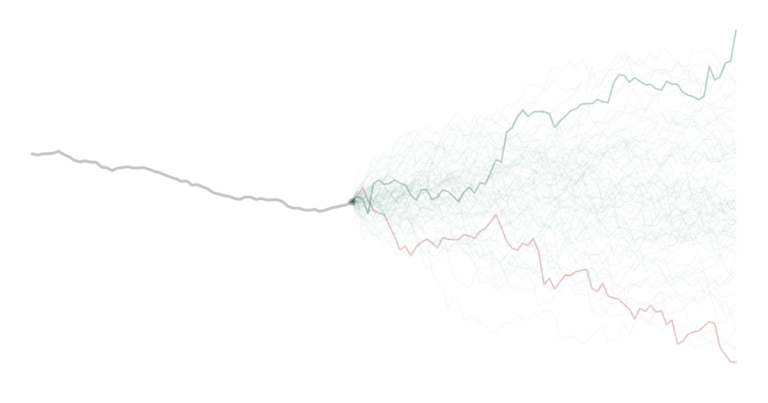

Last week, two memory chipmakers were worth more than half of South Korea’s entire stock market. The same week, a single company, TSMC, made Taiwan’s market larger than India’s, a country with sixty times the population.
Both indices are going vertical. The Nifty isn’t. The usual reaction is to ask what India is doing wrong. The better question is whether the Nifty can even do what Taiwan and Korea are doing, given what it’s built from.
The mechanism
The lazy story is that Taiwan and Korea got lucky on their sector mix. They did. But luck only explains which sector wins. It doesn’t explain why one winning stock takes the whole index vertical with it.
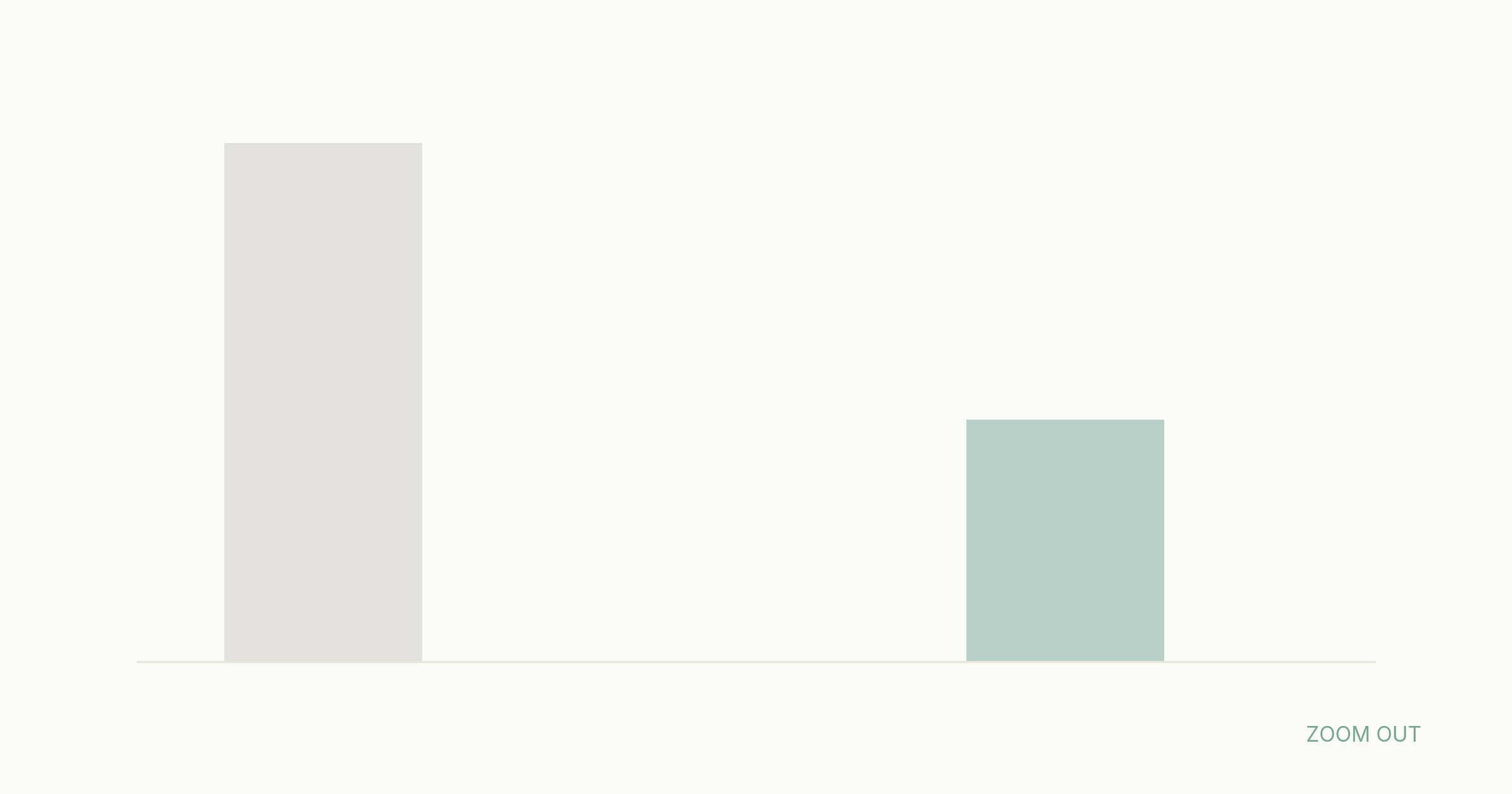
That mechanism is in the index design. Cap-weighted indices have a feature people forget: the winner mechanically swallows the index. TSMC was about 30 per cent of Taiwan’s index in 2022 and is around 42 per cent now. Samsung and SK Hynix combined have crossed 50 per cent of the KOSPI for the first time. When one stock is that large and runs 50 per cent, the index goes vertical. The same run inside a diversified index barely moves the needle. The shortage produced the returns; the index design transmitted them. Concentration is an amplifier, not an engine.
What India holds instead
The Nifty 50 is also cap-weighted, also concentrated, just in a different thing. Its largest sector is financial services, around 35 per cent. IT, the obvious tech analogue, sits at 8 to 10 per cent and keeps falling.
Banks can never be what the world is suddenly short of. An Indian bank’s market is essentially the Indian economy.1 No global shortage to ride, no overseas pricing power, no way to charge ten times more for the product the way a chipmaker can in a squeeze. So India’s index is concentrated in a business model that has no path to a vertical move.
What moves a bank
If the Nifty can’t melt up on a global shortage, what drives its good years? Three things.
The biggest is the credit cycle, really how fast banks lend and how much of that lending goes bad, with bad loans swinging the most. A bank growing its book 15 per cent a year looks brilliant right up until the cycle turns and provisions eat three years of profit. India’s last cleansing ran from the 2015-16 RBI Asset Quality Review through the IL&FS collapse in September 2018, with bank NPAs peaking above 11 per cent. That stretch made or wrecked more bank returns than anything else. A “capex revival” is the bullish version: factories and roads are better lending than risky personal loans.
The second is the margin, the gap between deposit costs and loan yields. And “rate cuts are good for banks” is mostly wrong on the mechanics. About 60 per cent of Indian floating-rate loans are tied to the RBI’s repo rate and reprice the day it moves; deposits reset on maturity, months later.2 So when the RBI hikes, the margin widens first; when it cuts, it gets pinched first, with a one-off bond gain that partly cancels out.
The third is flows. Foreign money buying India ends up in the most liquid mega-cap banks because that’s the only place to deploy billions quickly, bidding them up well before earnings catch up. HDFC Bank at three to four times book against a state-owned bank at 0.8 isn’t an earnings gap, it’s a trust gap. Flows amplify the other two; they don’t drive anything.
The risk, and the shield
A 35 per cent concentration in banks ties the entire market to one thing: the health of lending. When your biggest sector lends to everyone else, a wave of bad loans doesn’t stay in one corner. The risk is real.
India has a specific reason it’s dampened. The Reserve Bank of India works like a brake pressed hardest when things run hottest, and its main tool is risk weights. Raise the risk weight on a kind of loan and banks must hold more capital against it, which makes that lending less profitable, which slows it. In November 2023 the RBI did exactly this to the unsecured personal-loan boom and to bank lending to NBFCs, cooling both before either turned into a problem. The brake isn’t free (it caps upside too, and the RBI is not infallible) but it is precisely the shock absorber Taiwan and Korea don’t have. When 42 per cent of your index is one chipmaker, no regulator dampens the AI boom. Upside uncapped, downside uncapped. On Korea’s record-breaking day this month, the KOSPI hit an all-time high while 826 of its 920 stocks fell. Only 77 advanced. The index and the real market have come apart.
The 2022 proof
This isn’t theory. In 2022, when the chip cycle last turned, Taiwan’s index fell 22.4 per cent on the year. Korea was among the worst-hit markets in Asia. The Nifty finished 2022 up 4.3 per cent, one of the only major markets in the world that did. The same structure melting Taiwan up today is the one that cut it deepest last time.
That is the trade the two index designs represent. Faster and more fragile, against slower and more cushioned.
Which leaves a harder question than the one we started with. If the Nifty is no longer where Indian growth lives, what is it a benchmark for? The country’s stability, maybe. The country’s banks, certainly. India’s growth has moved on to mid and small cap indices. The Nifty 50 hasn’t caught up.
- Indian banks do have foreign operations — SBI has 200+ overseas offices, others have smaller footprints — but the foreign loan book is a small fraction of total assets and mostly serves Indian businesses operating abroad. It is not a global lending franchise. ↩︎
- The repricing effect is much sharper for private banks than for public-sector banks. RBI Annual Report data as of December 2024 (Business Standard, 30 May 2025): 85.9 per cent of private bank floating-rate loans are EBLR-linked vs 44.6 per cent for PSBs, with 61 per cent for the system overall. ↩︎