
Data-backed writing on markets and money. Zoom Out to see the big picture.
Stay zoomed out. One email a week.
Latest
-

The Nifty doesn’t owe you a rebound
The Nifty has returned 6.6% a year for five years. The chart that promises a rebound shows up just as clearly in fake markets that cannot rebound. Meanwhile, earnings rose 81% and the P/E fell from 27 to 19.
-

A bonus and a split are the same thing. Until you sell.
Bonus and split do the same thing to your holding. Same share count after, same price, same stake in the same company. They also do the same thing to your P&L, right up until you sell. Then they diverge, by 8%…
-

The advice you’re getting may not be replicable
Thousands of Indian investors borrowed early, concentrated hard and held through the falls. You have only ever heard from the ones it worked for. A look at why the origin stories of famous investors are poor instructions, and the three questions…
-

Why India’s hottest IPOs pay retail investors the least
India’s IPO market has one reliable trade, and it belongs to whoever applies for the right issues, not whoever applies for the biggest ones. Across 182 mainboard listings from 2019 to 2023 (capped at 2023 so that 3 year returns of…
-

Most Stocks Lose. A Few Make Everything. What That Means for How You Invest.
Hendrik Bessembinder asked a deceptively simple question of US stocks: do they actually beat Treasury bills? The answer, for most of them, was no. We ran the same test on the Indian market with an equal weight assigned to each of…
-

Stop Looking for Unbiased Advice. Start Looking for Aligned Advice.
Everyone advising you how to invest sits on a payoff structure that shapes what they say. The question is not whether they are biased — everyone is. The question is which direction the bias runs, and whether it points toward your…
-

The India AI Trade Is a Global AI Trade
India’s AI proxies, fibre, power and electronics, ran 100 to 450% on the global capex cycle. On Monday they fell with Samsung and Korea while the Nifty barely moved. A note on what these stocks actually are.
-

The velocity ceiling: why an Indian melt-up won’t look like Taiwan’s
The Nifty cannot melt up the way Taiwan’s market just did, and the reason is the same thing that keeps it from blowing up.
-

News & Noise
A short game about trading the news. 12 real headlines, 12 real market reactions, your portfolio on every call. Takes about 8 minutes.
-

The Legibility Trap
Why retail investors fixate on fees and taxes, and miss what actually moves their returns
-

Momentum doesn’t fall like high-flyers
The thinking says high-flying stocks crack first in a correction. The latest fall in Indian equities says otherwise. The 240 NSE stocks that had run up the most going in had a median return of around −9.5%, almost four points shallower…
-

Why Being Right 60% of the Time and 40% of the Time Can Both Make You Rich
One of the most common questions investors ask is, “what percentage of your trades are winners?” It sounds perfectly reasonable. And honestly, it’s the same question I would have asked a few years ago. We’re wired to think in terms of…
-
Volatility is not risk. It only feels like risk
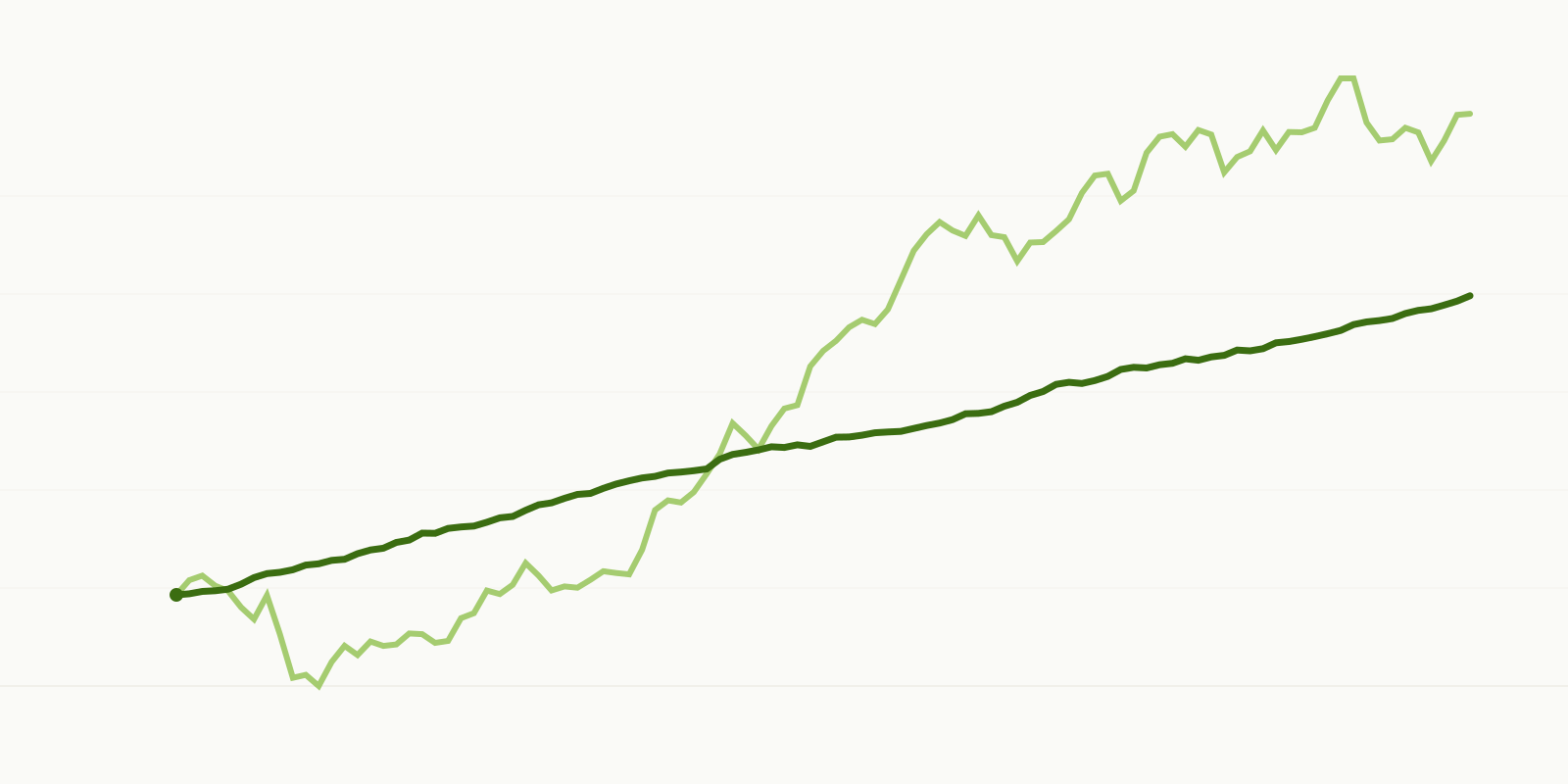
Modern Portfolio Theory taught a generation of investors that risk equals volatility. That conflation is fine for a 60-year-old living off their portfolio. For a 30-year-old with three decades of compounding ahead, it is one of the most expensive ideas in…
-

Why every retirement number is wrong
Money is not a spreadsheet problem. The conversation keeps pretending it is.
-

The factor that won, and what it cost
Most equity investors think they own “the market.” They actually own a factor. Over 21 years on Nifty 500 data, the gap between the best and worst factor turned ₹1 lakh into either ₹52 lakhs or ₹13 lakhs. The interesting part…
-
Why retail investors keep buying tops and selling bottoms
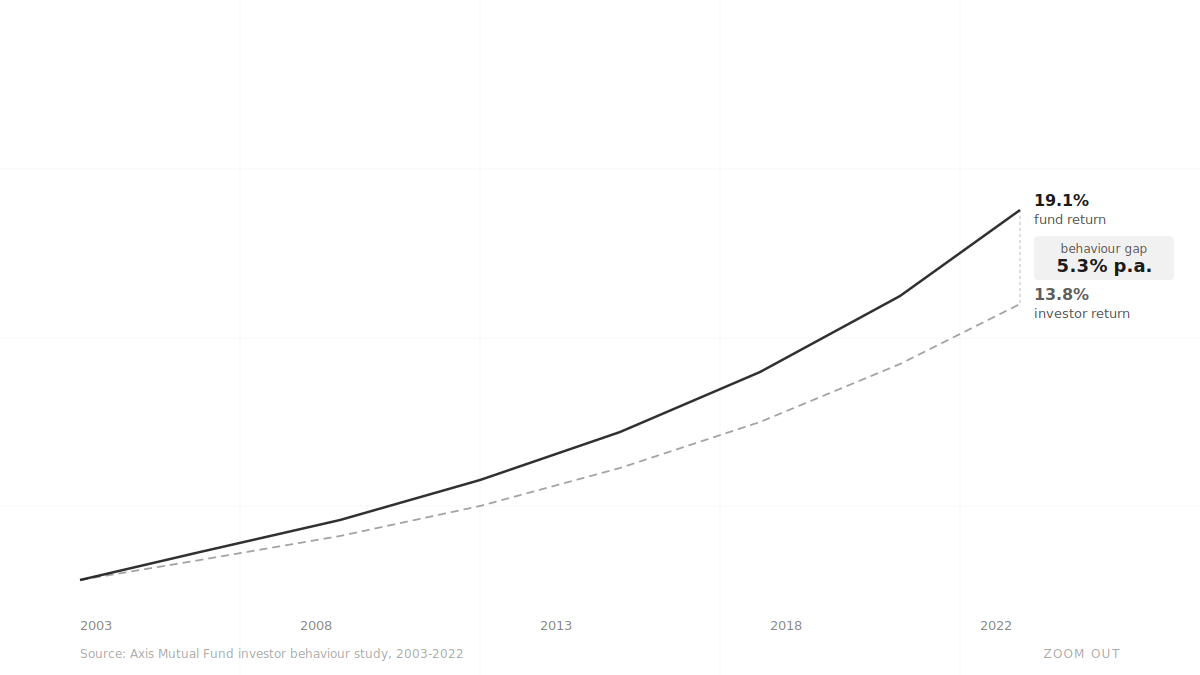
Equity funds delivered 19% CAGR over 20 years. The average investor in those same funds earned 14%. That 5 percentage point gap is not a fees problem. It is not a fund selection problem. It is a behaviour problem — and…
-
“Buy More When Markets Fall” – Does It Actually Work?
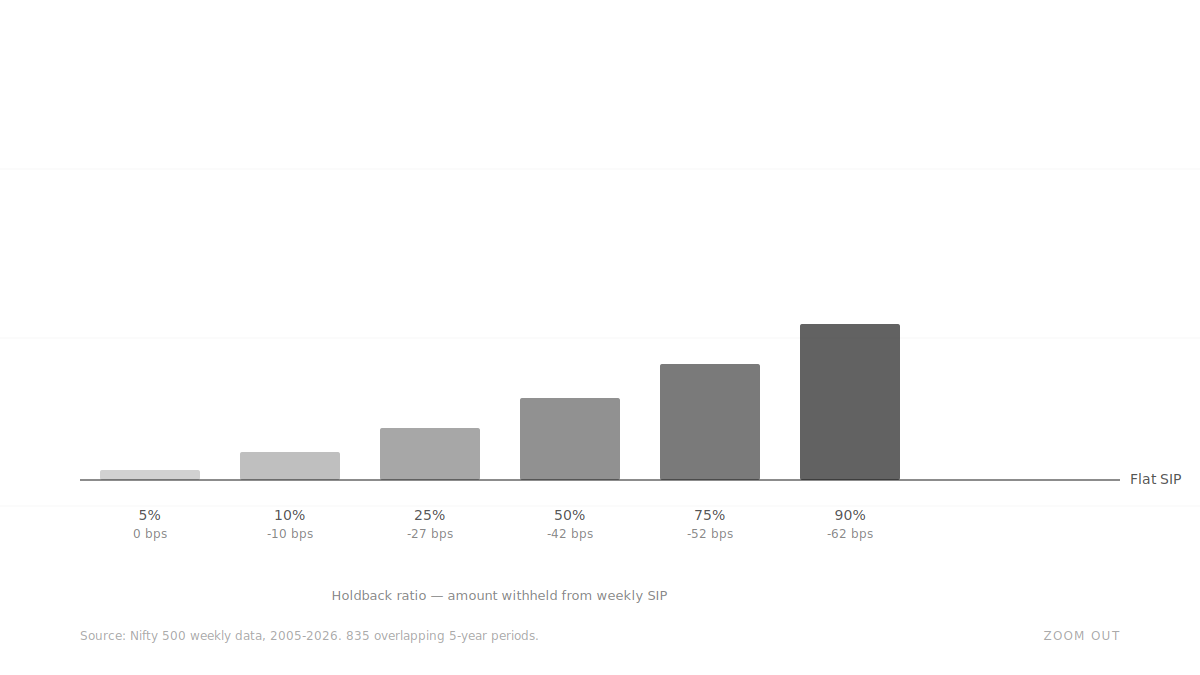
We tested 835 overlapping 5-year periods on Nifty 500 data. At every holdback ratio, the Buy the Dip SIP loses to a flat SIP. The more you hold back, the more you lose. The dumb SIP wins because it never hesitates.
-
Volatility Clusters – 18 Years of NSE Data Proves It
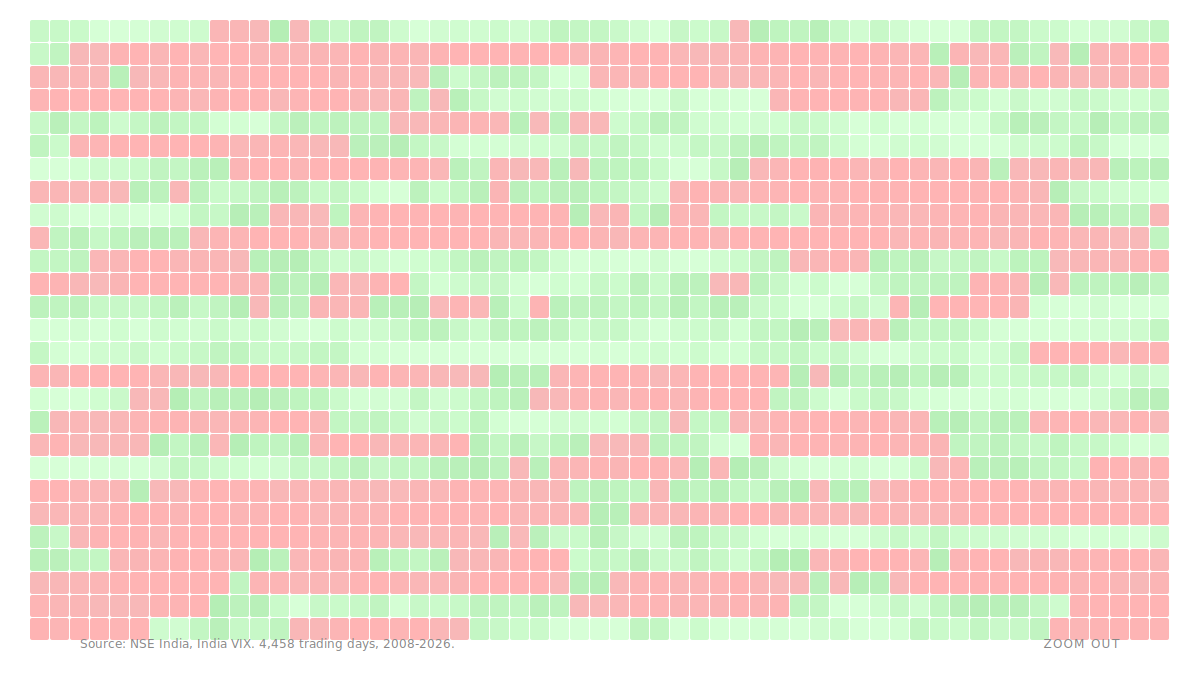
We mapped every trading day since 2008 across Nifty 50 and India VIX. Volatility doesn’t arrive randomly — it travels in waves. Here’s what 4,458 trading days look like laid out in a grid.
-
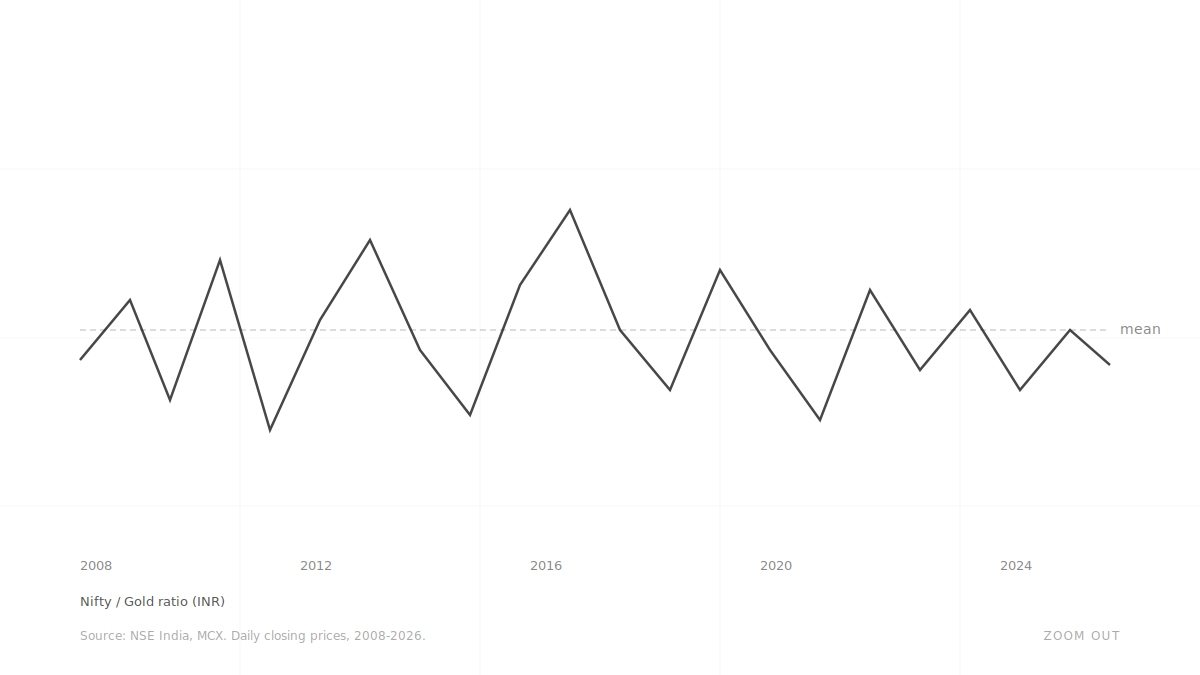
Why Ratio Charts Don’t Work: The Seductive Trap of Mean Reversion
Ratio charts have become a staple tool for traders seeking to time markets. The logic seems elegant: when gold becomes “expensive” relative to silver, or when stocks become “undervalued” compared to gold, the ratio must eventually revert to its mean. But…